Daffodils
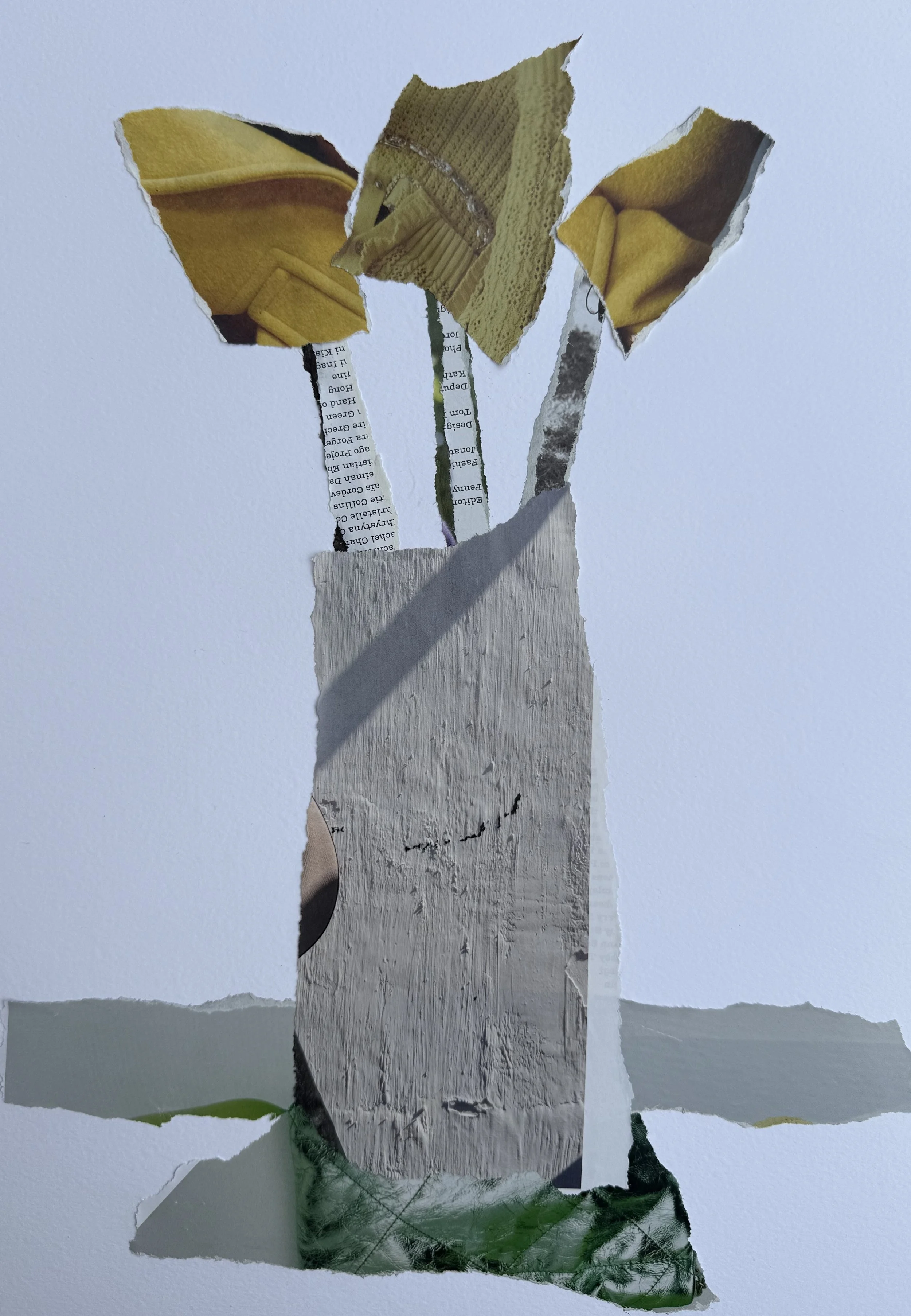
I was listening to David Perell’s How I Write Podcast at the gym last week. He was in conversation with journalist Fareed Zakaria. Towards the end of the interview, Zakaria described the influence of a mentor, novelist Khushwant Singh, when he was ten years old. Singh encouraged him to read and memorise poetry. One of those poems was Wordsworth’s I wandered lonely as a cloud. During the interview, Zakaria recited the poem. I cannot say for certain that I have ever read Wordsworth’s poem before. What I can say is that while listening to Zakaria recite the poem, I experienced moments of transportation.
I Wandered Lonely as a Cloud
By William Wordsworth
I wandered lonely as a cloud
That floats on high o’er vales and hills,
When all at once I saw a crowd,
A host, of golden daffodils;
Beside the lake, beneath the trees,
Fluttering and dancing in the breeze.
Continuous as the stars that shine
And twinkle on the milky way,
They stretched in never-ending line
Along the margin of a bay:
Ten thousand saw I at a glance,
Tossing their heads in sprightly dance.
The waves beside them danced; but they
Out-did the sparkling waves in glee:
A poet could not but be gay,
In such a jocund company:
I gazed—and gazed—but little thought
What wealth the show to me had brought:
For oft, when on my couch I lie
In vacant or in pensive mood,
They flash upon that inward eye
Which is the bliss of solitude;
And then my heart with pleasure fills,
And dances with the daffodils.
Wordsworth walked with his sister Dorothy in 1802 when they came upon drifts of daffodils. Two years later Wordsworth turned that experience into a poem.
Years earlier, Charles Simic’s My Mother was a braid of black smoke had a similar effect. Simic ended the prose poem with the high heavens were full of little shrunken deaf ears instead of stars. Comparing stars to ‘shrunken deaf ears’ is a comparison that operates like magic on my mind.
Visual art can have similar effects. I discovered this while standing in front of Philip Clairmont’s The Scarred Couch. The subject of this painting is an enormous psychedelic couch that vibrates with pulsating energy. I can even recall dreaming about that couch. Wordsworth, Simic and Clairmont are elite athletes of the art world.
However, moments like the ones I have described are not only the preserve of famous artists. One afternoon a couple of years ago I came across Tracey Osborne’s Wishlists in the Eastside Gallery in Christchurch — a community arts centre. Osborne’s work, made up of chewed up shopping lists, had a similar effect on me. I am not familiar with Osborne or any of her other work. I looked at her work closely. I even began an ekphrasis that I never finished.
Saliva shaped,
like lined teeth,
like screwed up faces,
small wishes,
scrubbed clean wishes,
troubled wishes,
balled up wishes…
How do you communicate the way that your mind moves, that the nerve endings in your scalp are alive and rippling beneath your hair, and that you could happily live like this? There are no words — yet Wordsworth and Simic found words, Clairmont used paint, and Osborne repurposed shopping lists.
I want more quirks and leaps of faith that affect my mind and body. Art that takes me to random and unexpected places, that I could never have guessed existed, and might never have discovered on my own, because when those leaps work, the individual and collective payoff is vast.