Recognition
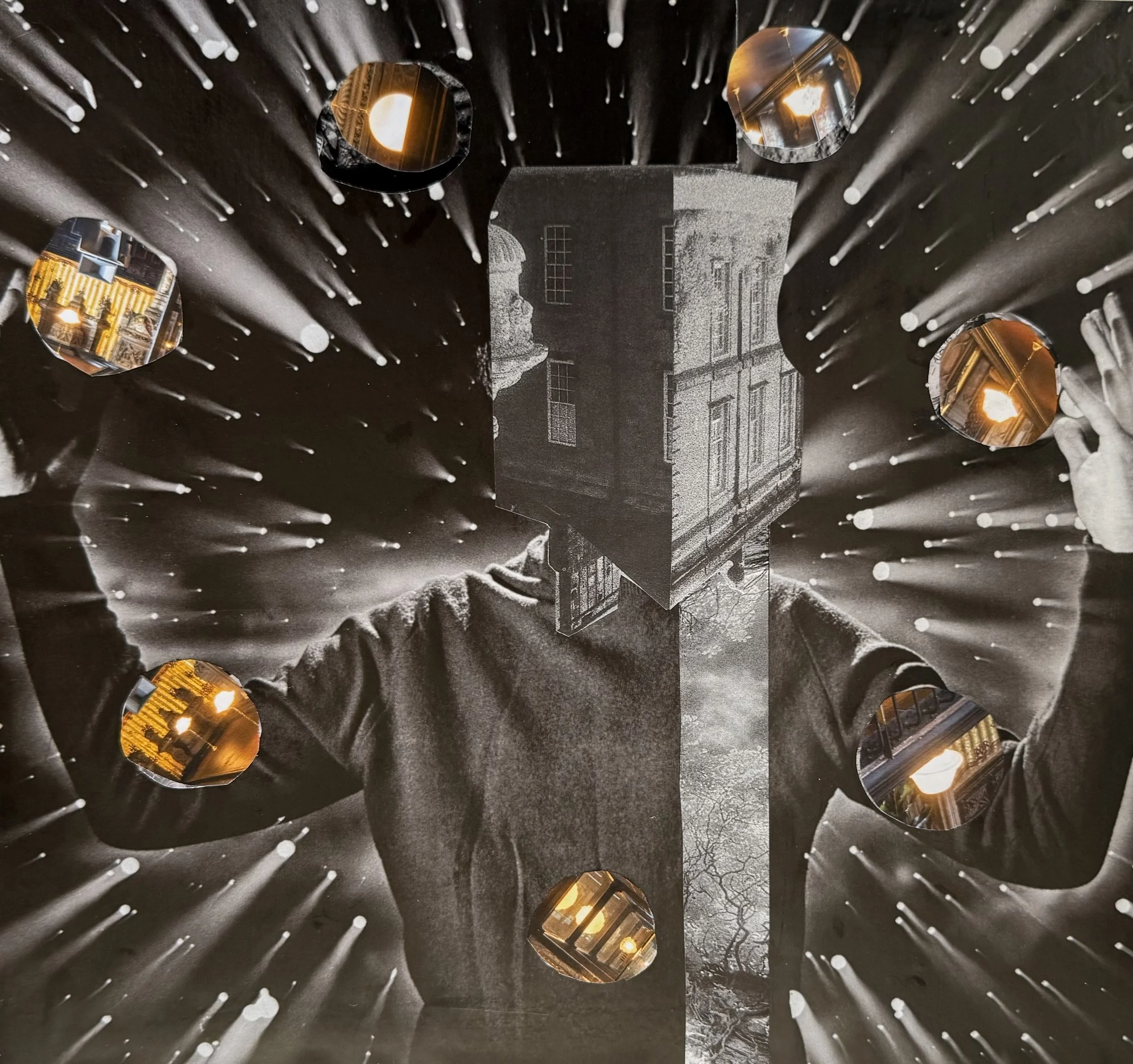
Untitled (Building). Collage on paper. 2025.
A few weeks ago, I found a New Zealand-made graphite wool-and-silk coat at a second-hand clothing shop in Christchurch. There was that moment of recognition because I had found exactly what I hadn’t known I was looking for.
I browse second-hand bookshops for magazines with the same intention I bring to clothing racks, knowing that along with the unremarkable finds, there will also be treasure. My studio staples are National Geographic landscapes, Vogue editorials, Country Living’s domestic dream interiors, and trade magazines aimed at hairstylists and optometrists.
I leaf through each magazine until I have a pile of images that might contribute to a finished piece. Sometimes the search brings nothing. That is part of it too.
Several years ago, during a period of upheaval, I turned to collage. What began as an intuitive experiment became Household Work, a ten-piece series. A friend passed on a stack of hairstylist magazines, models with extraordinary hair. One woman became the foundation of a new work. I cut around her silhouette and set her in a new room. To one side of her face I added an apple, and hands, from National Geographic.
Looking back, the image is plainly about that time, though I could not have said so while I was making it.
That is the thing about the method. Whether it is texture from a couture gown, a desert landscape, or a line of text, each fragment arrives carrying its original meaning and takes on another. In one work I combined National Geographic hills and tussock, two doors from an interior magazine, figures from a fashion spread, and houseplants from Country Living. Separate images became a story about boundaries and what is allowed across them.
Once, I accidentally tore the face of a model whose image I had been saving for weeks. The frustration lasted a minute. Then I found a fragment of green glass whose pink reflection echoed her dress and made the substitution. The work went somewhere I could not have planned.
Sometimes I cut precisely. Sometimes I tear on purpose. A torn edge is not a flaw; it is a decision made by the material.
Recognition arrives before understanding — in the shop, in the studio, and afterwards, when you look at what you have made and find out what it is about.